SO, HOW DO WE
LEAVE WITH CARE?

In September 2025, due to the Trump administration's cut to USAID, the UNHCR Malawi office was forced to close, bringing to an end protection, healthcare, and the monthly $5 stipend. Schools have closed, and life-giving resources, including water and food, are severely reduced, as the World Food Program shuts its doors as well.

The work and presence of UNHCR Mozambique in Maratane Refugee Settlement is being formally handed over to the government. It is unclear if there are funds or resources to deliver what is required.

Consequently, our time on the ground is over, as we are now unable to meet the university criteria for risk assessment, or ethics of care for all involved. Any nameable outcomes or impacts are likely to be overtaken by new and unprecedented levels of survival and emergency.
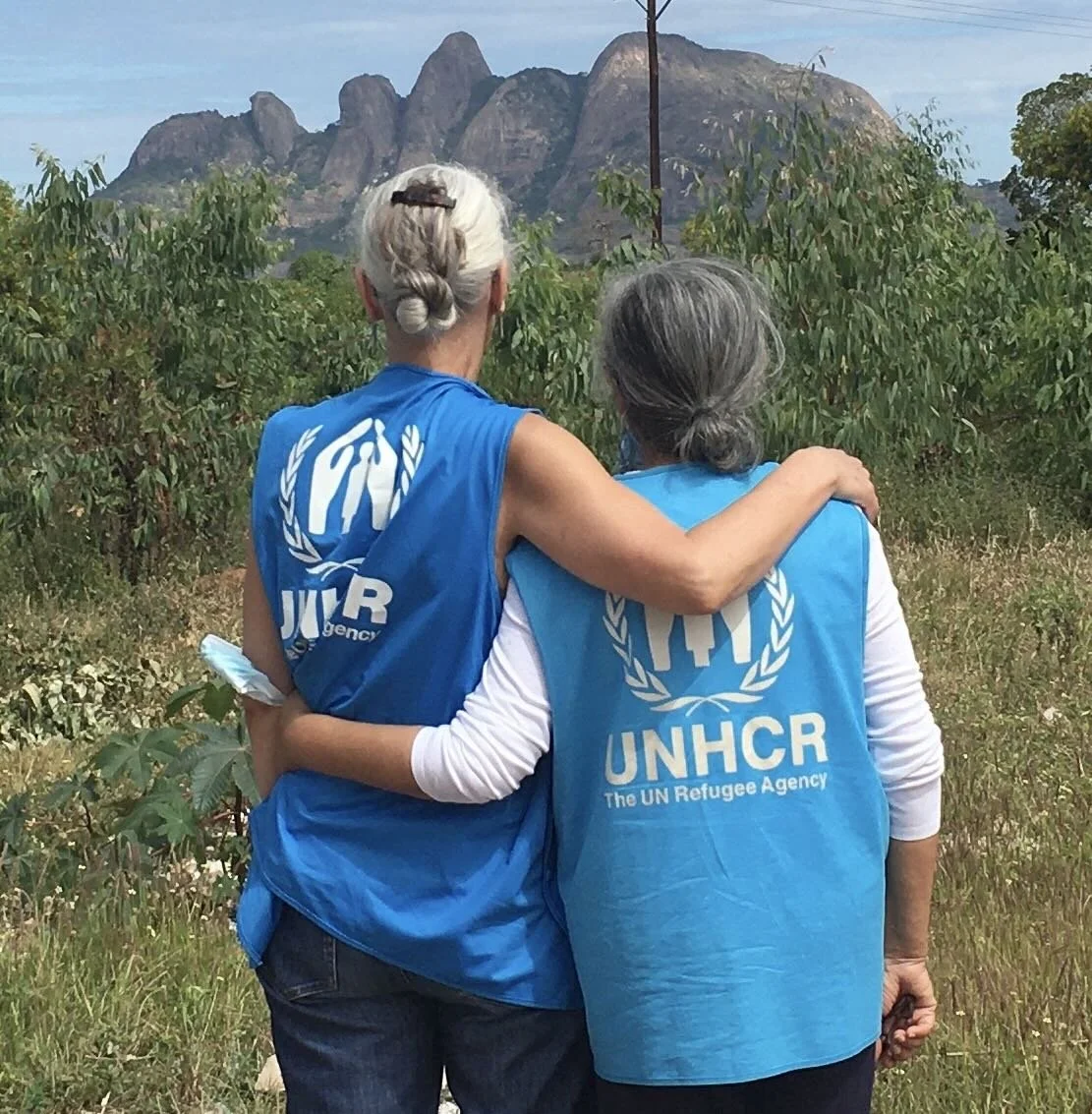
Deepa & Helen - care of UNHCR Mozambique

As we come to an end, our attention is turned to how we leave with care and it brings us new questions:

  • What is worth doing in these times of collapse?

  • Where do we find hope?

  • How to hold the feelings of leaving, as their lives are upended with no certainty of how they will survive?

  • What is left?

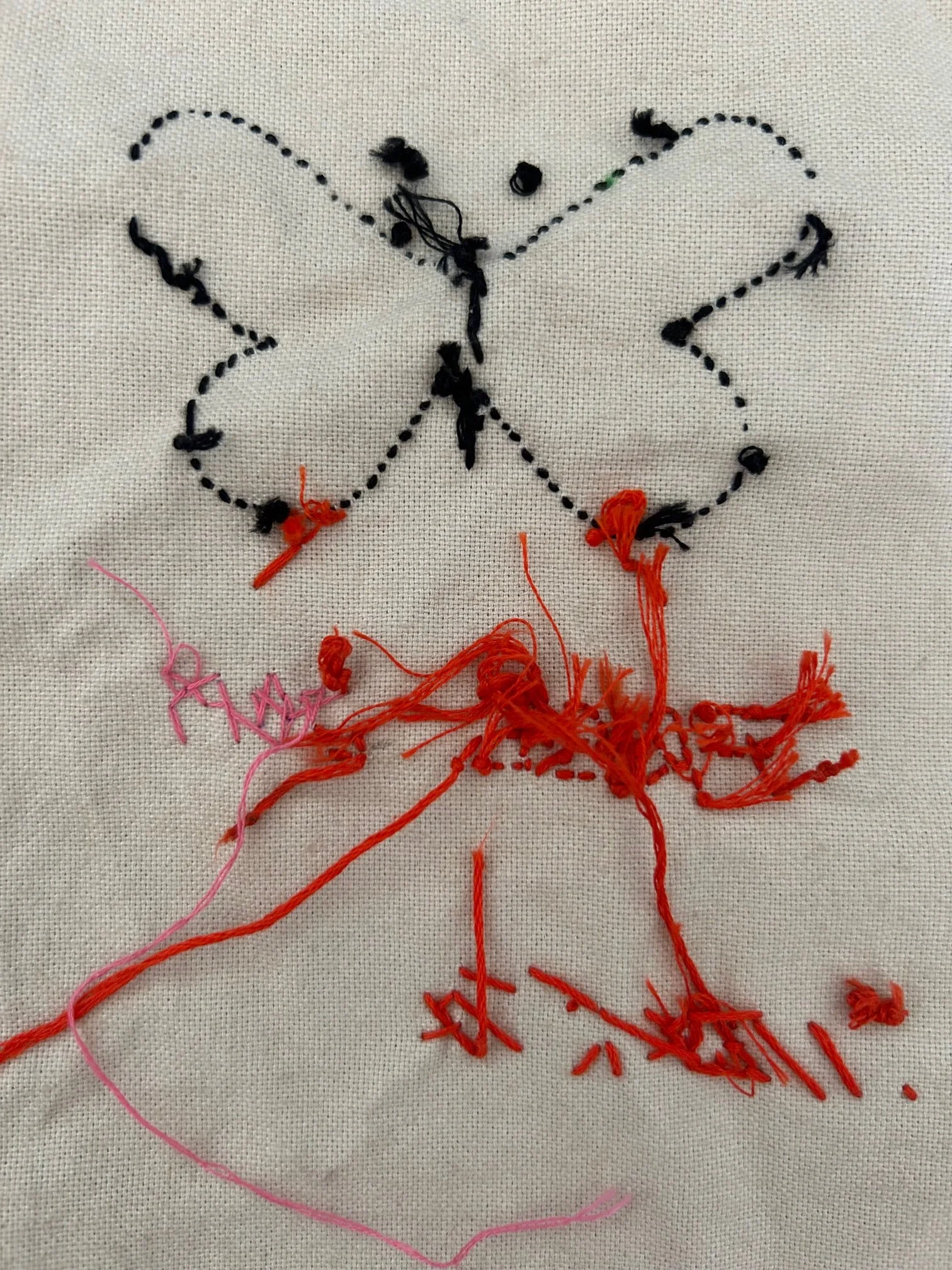
Embroidered apron – ‘Butterfly of freedom’ by Cooperativa Bordadose Artes de Maratane LdA - Mozambique

BEYOND COLLASPE.

In Dzaleka, we move at the speed of survival, remaining connected to the community leaders whose roles are now supercharged, as they try to contend with an unprecedented loss of protection and resource and whilst funding has come to a natural end too, Helen, Deepa and David Betteridge (long time film collaborator) are responding personally to strategic and practical requests for help. Examples include funding assessments to identify where the most vulnerable in the camp live, identifying mechanisms for water distribution, and paying for coffins.
A fashion mentoring project continues, whereby academics from local Luanar University gift their expertise to designers in camp, and here at LCF, we are co-designing a new project between our students, DAL, UNHCR MADE51 and a local SME, who can provide employment and food for a limited number of women, funded by us personally.

In Mozambique, the soap makers are still in the process of certifying their products, and whilst the original vision of making them the nominated industrial suppliers to UNHCR is not possible, it opens up other commercial possibilities. 
As in other parts of the world, UNHCR is training refugees to fill some of the roles left vacant by their departures. It is unclear if these roles are paid.