METHODOLOGIES
1.
Entering with care.
On our first visit to Maratane we were met by glorious song – the female security guard of Maratane (Gloria) often sings with her brother on the only guitar in camp, shared, untuned and kept locked in a church, until the next song.
2.
Listening before acting.
Read by Deepa Patel
We often began by selecting a poem that could bring us all into close connection. The words, translated into three languages, frequently surfaced the unexpected and the memorable – providing places to start imagining anew together.
We locked up our wisdom into our bones
And swallowed the keys
They sank in our rivers of blood
And we forgot the maps
Because we had to forget the mysteries
To keep them safe.
We wove our hair into brooms
And swept over our paths
And then burned the earth with our rage
We didn’t teach our children
It was the only way to protect them,
we thought
But in them we planted seeds, seeds and keys
And told them stories and riddles and songs
With no roots, just tangled threads
That would take years to unwind
Just enough time
For the rains to fall again
and put out the fires
For the dams to break
For the rivers to flood
For the paths
to be walked again
For the soil to breathe
And as the old bones crumble
Deep beneath the rubble
We find we’ve always had the keys
Our stories and our maps
Our paths are revealed to some
And the seeds grow again
The threads are unspun
And woven again.
- Amara Bronwyn Hollow Bones
self-published December 2016.
3.
Creating small openings.
Invitations to small, low-stakes creative acts: writing a line of poetry, making a drawing, volunteering a memory… helped shift from a transactional exchange to a shared space.
Song and music in Maratane—whether in praise of God or to accompany work—were always present. Here, the embroiderers, who later formed the legally recognised, refugee-led organisation Cooperativa Bordados e Artes de Maratane Lda., sing in call and response on a 45-degree afternoon in Maratane.
4.
Reciprocity.
A practice of exchange that honours what is given and received, whether it is a story, a skill, or an invitation.
In Malawi, we started by bringing back all the first embroideries made in Dzaleka in the form of an embroidered map of Africa, complete with examples of new stitches and techniques to try. This was created as a gift by the leader of the MA Fashion, Textiles, Technology course, Alice Richardson. The smiles of recognition when they re-found their work within the map months later brought us all together, and our bonds began to deepen.
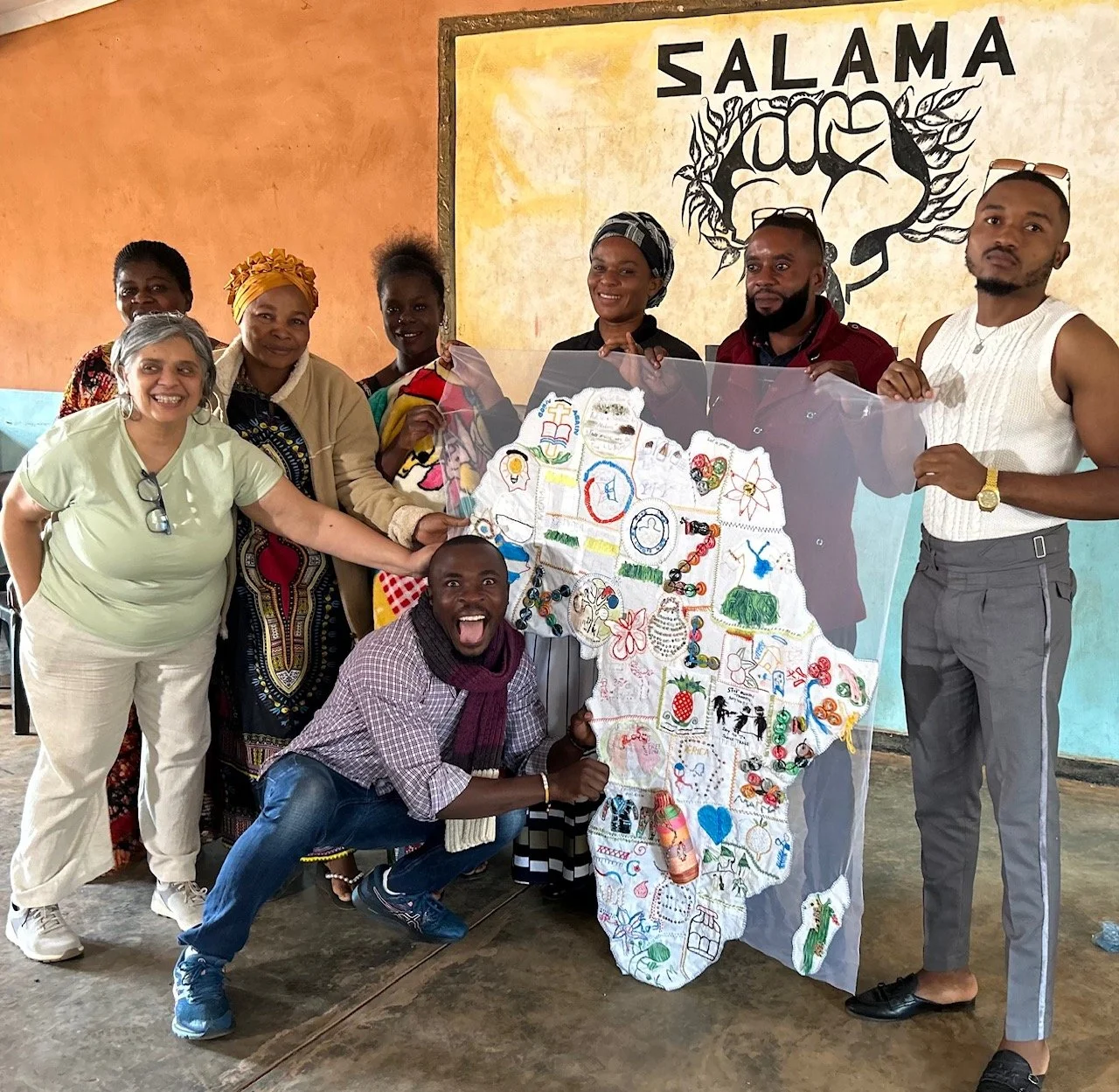
“For us, it has been the acceptance of valuing intuition over logic that has kept us all together – logic, constantly reminding us that the root problems are intractable (poverty, war, climate change, hunger) whilst intuition asks us to have faith in what we are yet to collectively imagine.”
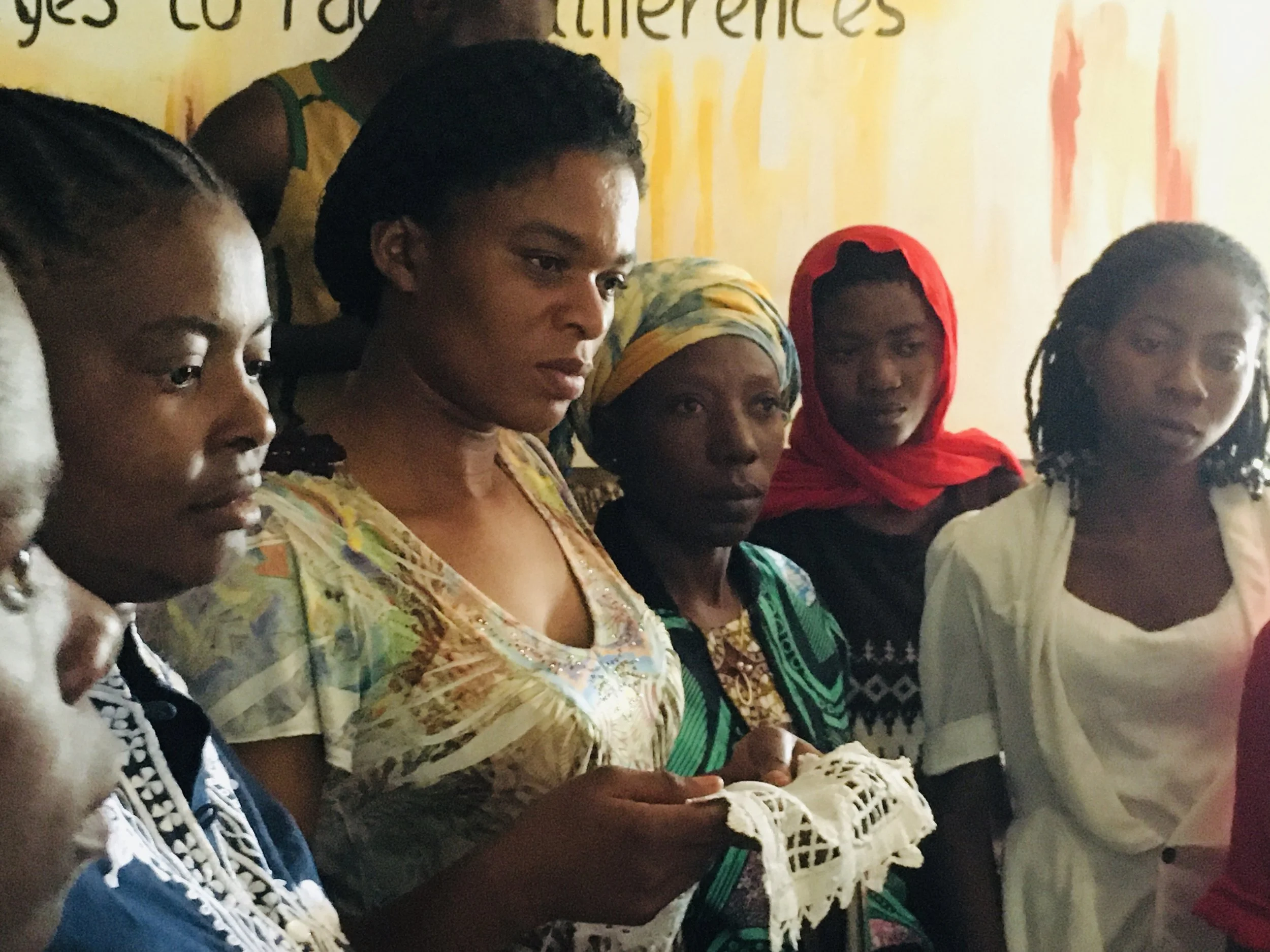
“I am always drawn to women’s faces, imagining the stories behind their eyes and held in their posture, their friendships and silent hierarchies. Here, they look through the embroidery samples provided by the Royal School of Needlework, going back hundreds of years – other women’s lives, captured in stitch across time.”
5.
Reflecting together.
The Courage Coat
Allowing emotional currents to be part of the space, resisting the urge to filter them out as “bias” or through discomfort.
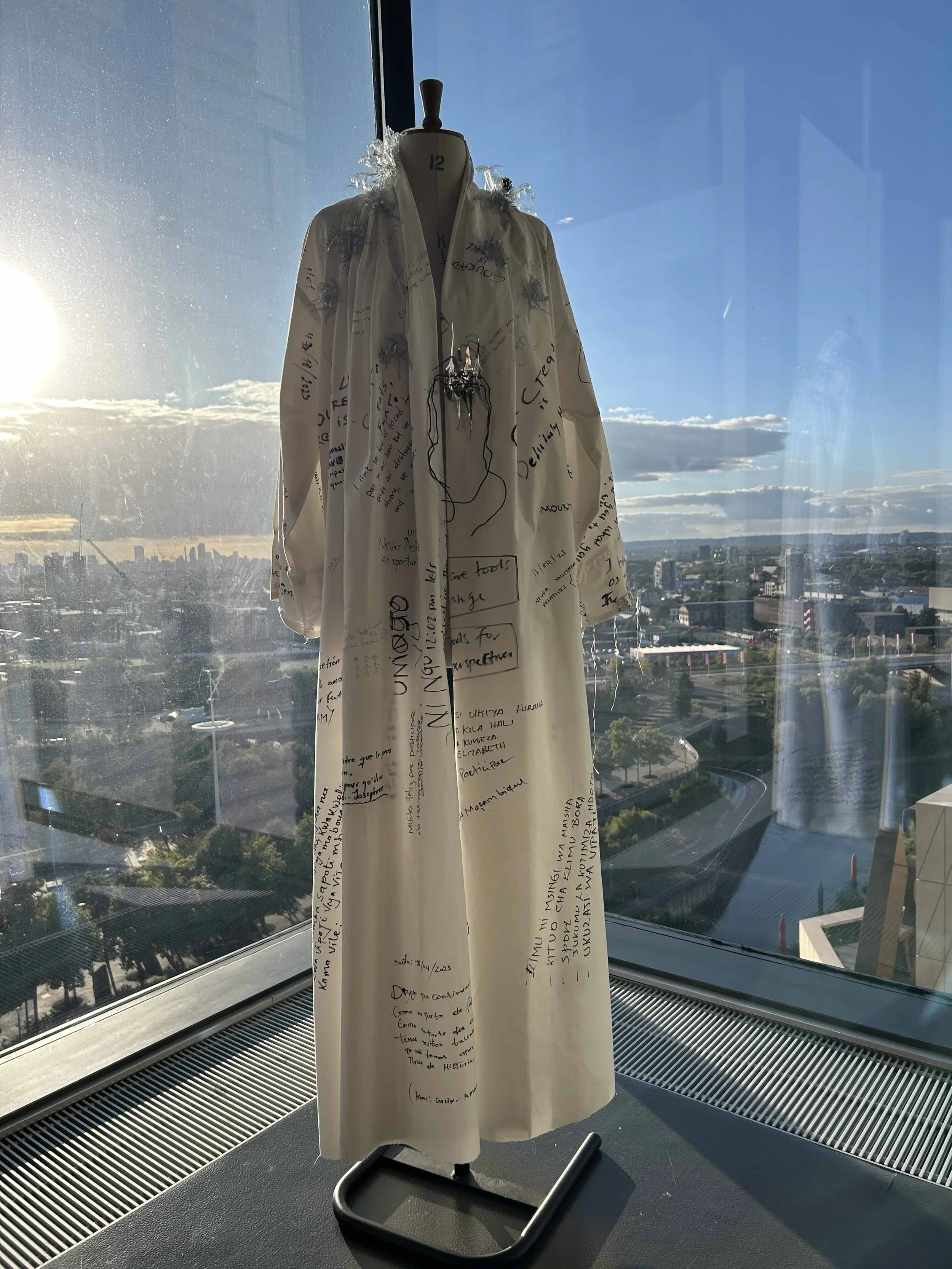
The “Courage Coat” was cut from the surprising outcomes of a gathering which brought together UNHCR Malawi, British Council Malawi, local entrepreneurs, poets, artists and NGO leaders to learn from our diverse experiences of courage and imagination – using the oblique strategies created by David Bowie and Brian Eno and without naming job descriptions, or hierarchies in the room, we learnt about each other from a place of uncommon equality.
The night before, we realised we needed a surface to record all the thoughts and feelings of the people we were due to work with the next day. Latitude13 hotel, our place of sustenance on all our trips to Malawi, provided us with a decommissioned cotton bedsheet and with it, we captured what courage meant to all in the room, across 5 languages and with multiple life experiences.
The hotel staff were intrigued by our request, and after sharing what we were doing, we decided to have the same experience with the staff at the hotel; the gardener, the security guards, the ladies that cleaned the rooms, the reception staff, the pool man.
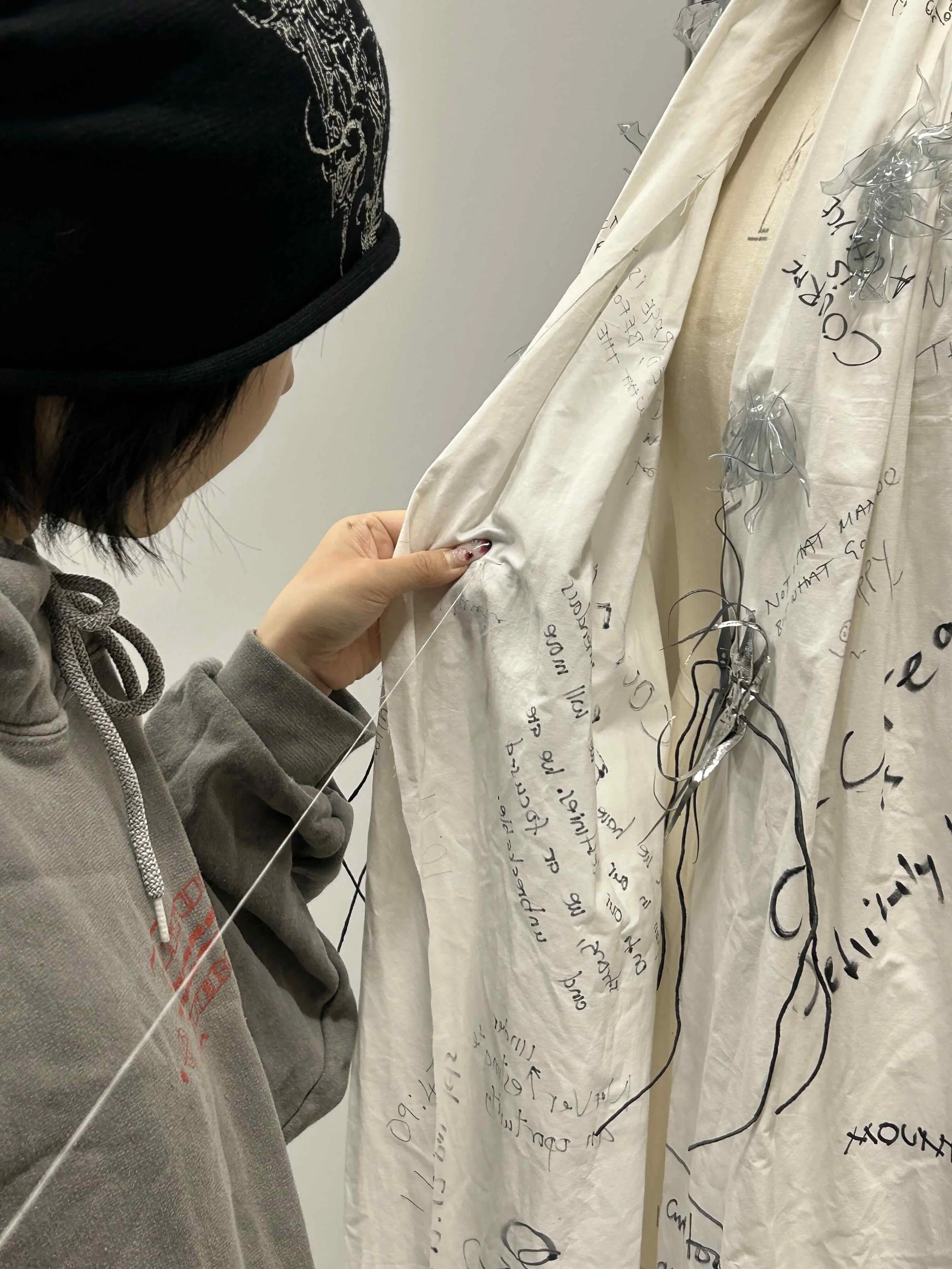
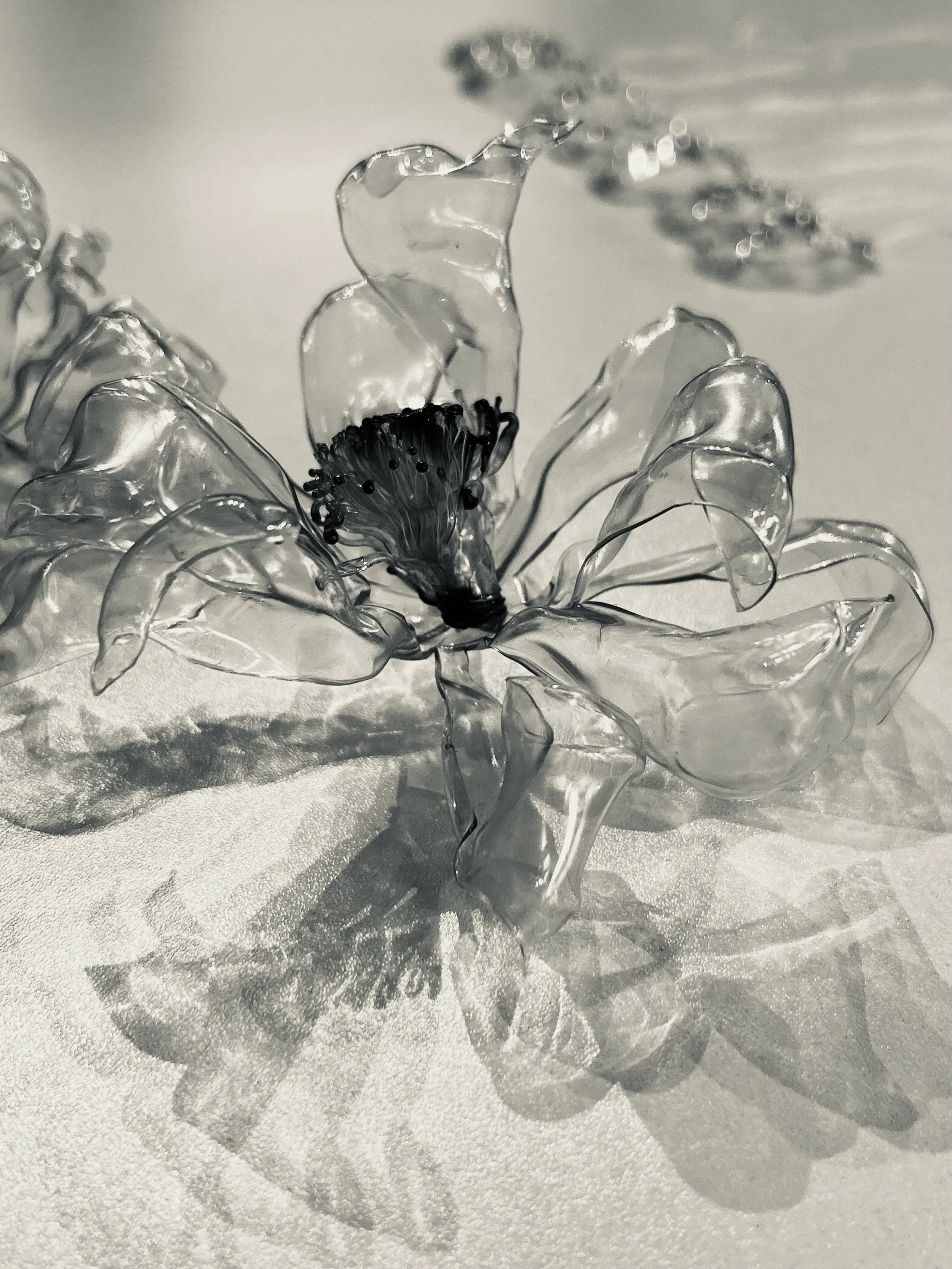
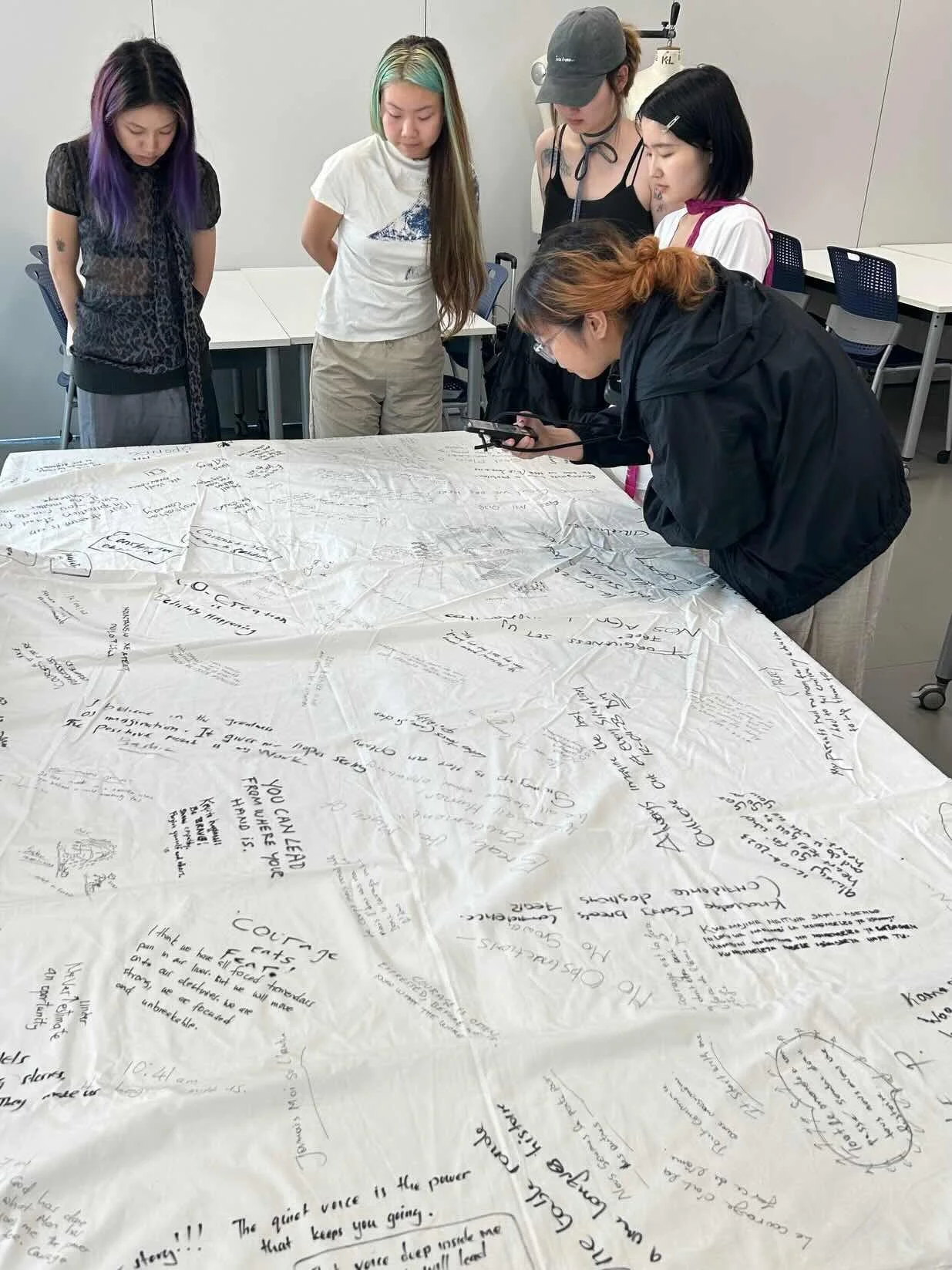
“Unlike fearlessness, courage has to be created.”
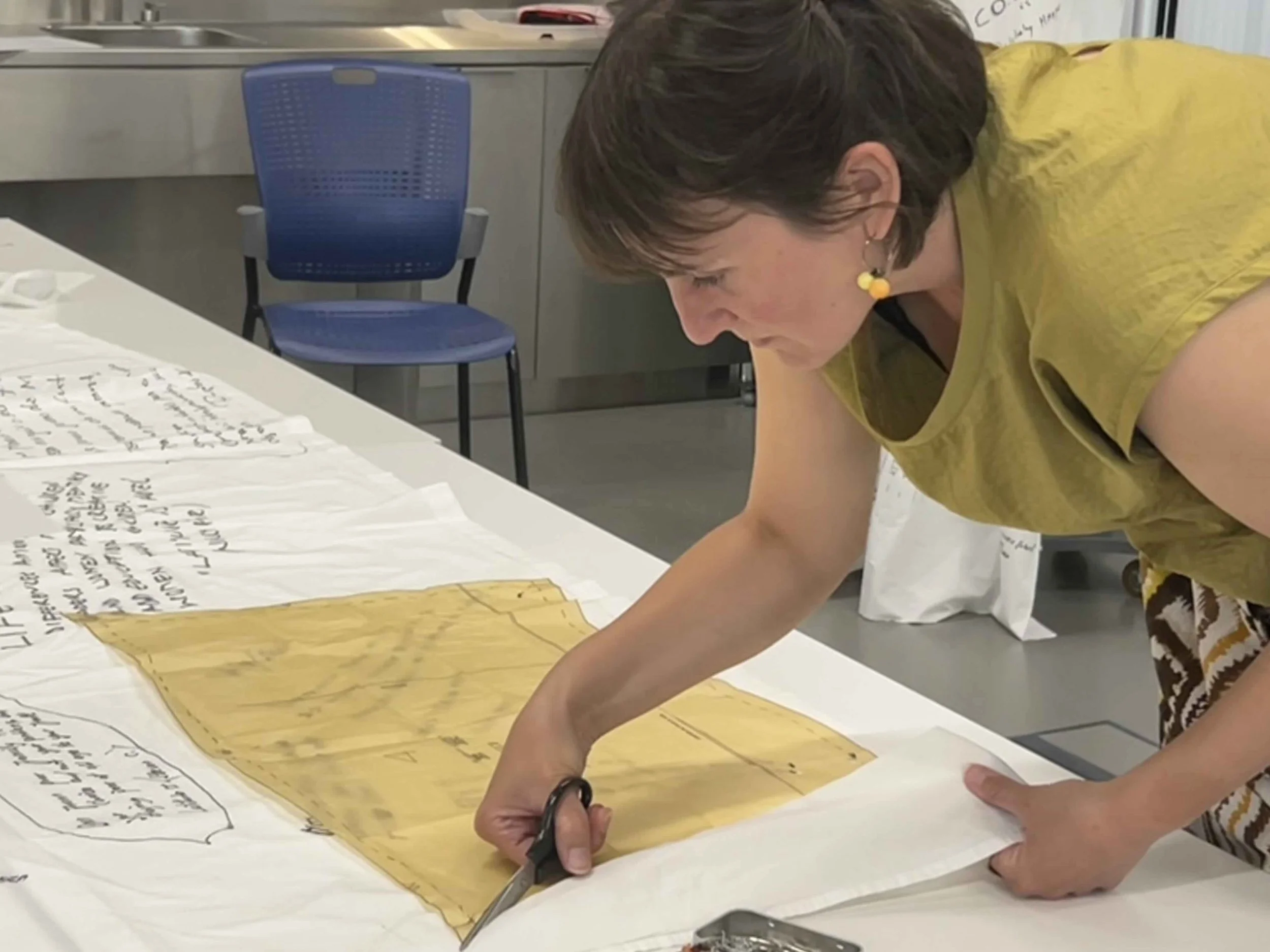
Student at LCF stitches the finishing touches to the “Courage Coat” made by Alice Richardson – the students adding more beautiful ideas for how what lies all around us can be reimagined.
Made from the base of plastic water bottles, melted with candles, the “plastic bottle lilies” were a wonder in themselves.
Students read all the messages of courage from the people who took part in the workshop in Malawi and consider where they have experienced courage in their own lives.
Alice Richardson, ever generous with her time and exquisite craft, makes the “Courage Coat” out of hours – using a recycled pattern from Helen’s fashion industry days of the 1990’s.
From the 13th floor of the LCF building, skyscape of London in the background, the "Courage coat” is ready to go home to Dzaleka refugee camp.
6.
Emergence over control.
Patterns reveal themselves through the process, rather than forcing them to appear on our terms and timescale.
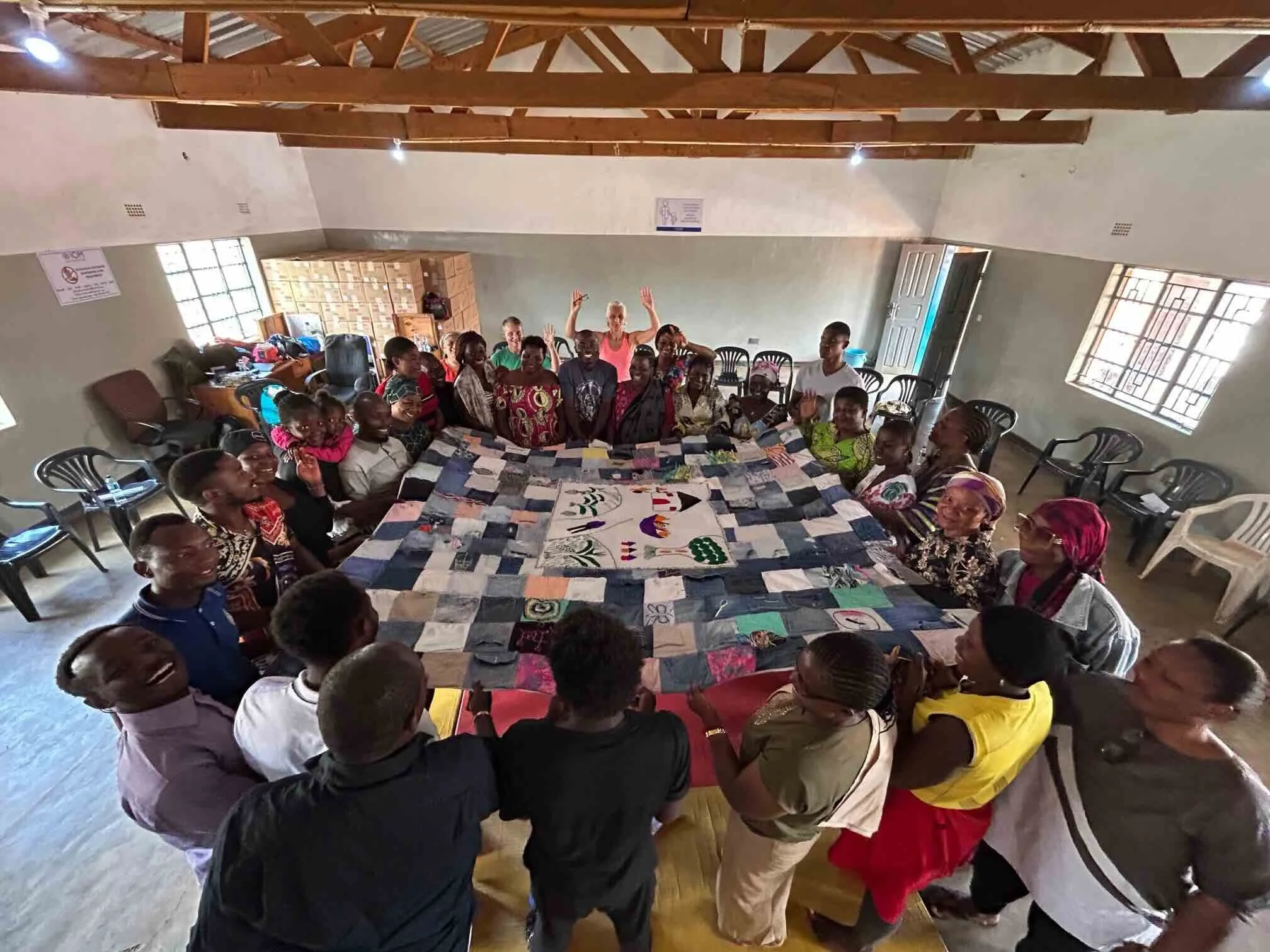
“The Pockets of Love”. A piece made by Dzaleka Arts Lab was a creative response to a local scam. Having brought bales of clothes to create new pieces, when opened, they found the trader had cut all the clothes in half, selling the bottom halves to someone else. With pockets being the only plentiful parts remaining, they created a blanket of textile vessels, filling them with handwritten notes of their lives, for our students to discover and connect to.
What gives you courage? What or who did you summon to meet it?
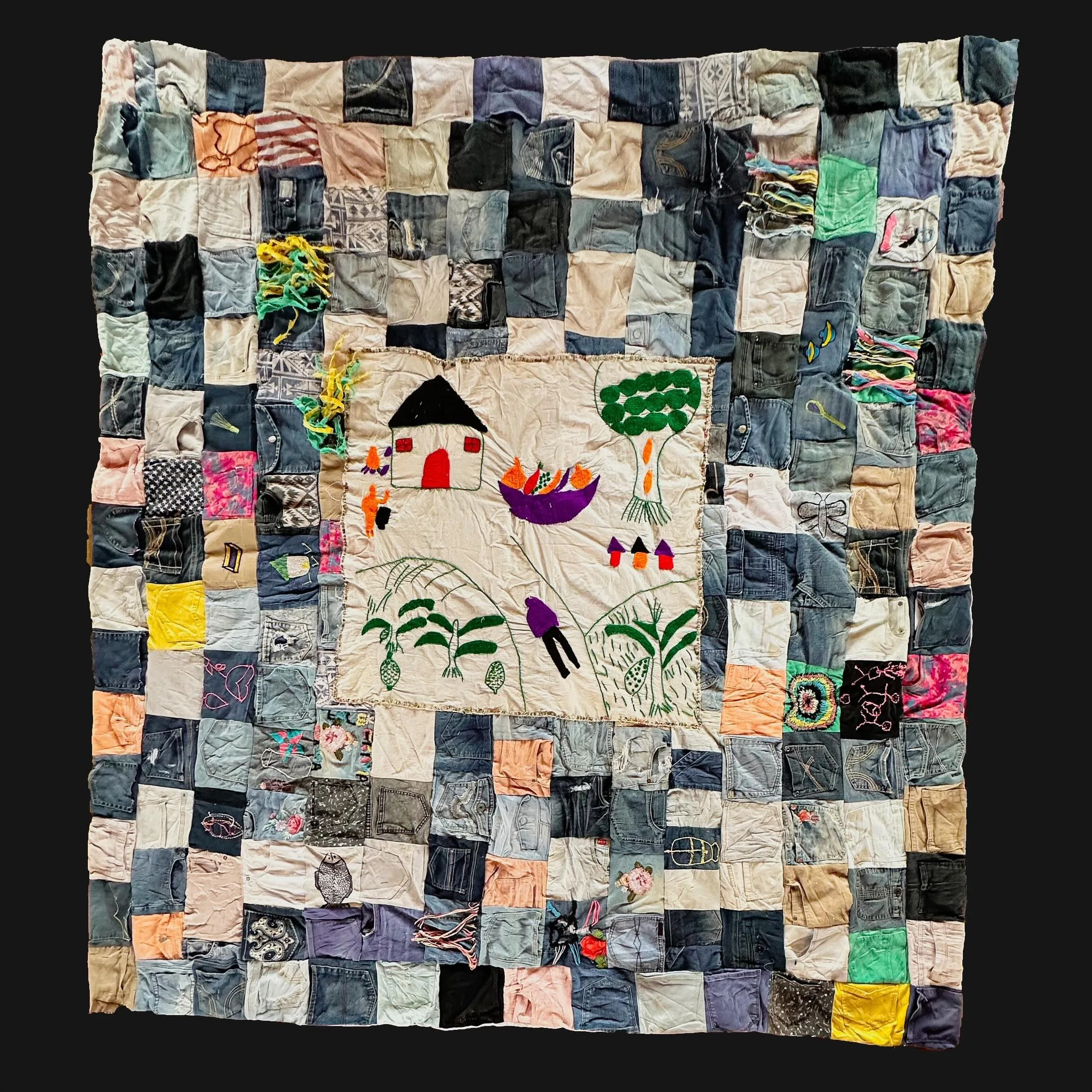
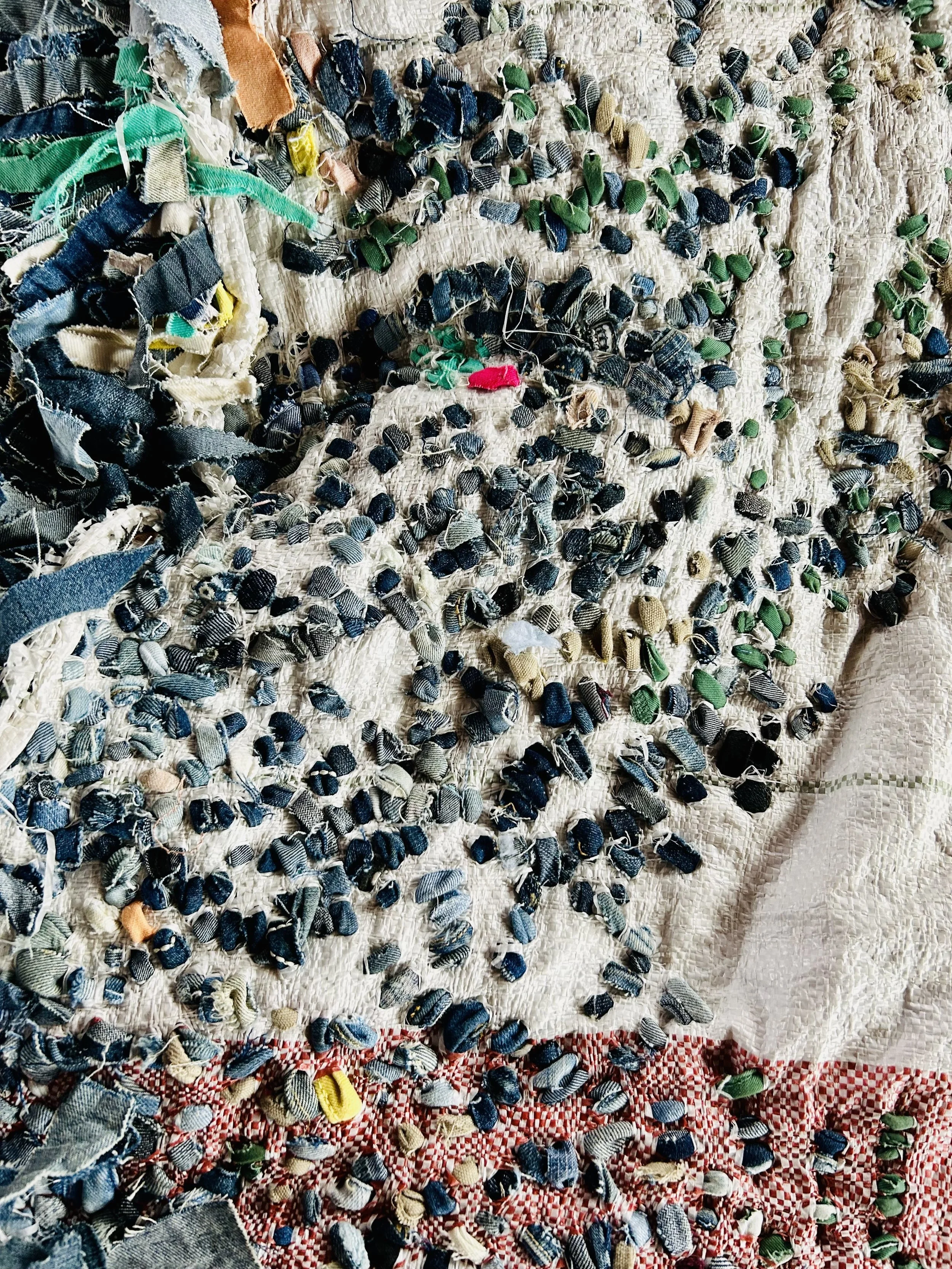
The back, as beautiful as the front – textile experiments by the Dzaleka Arts Lab.
The finished piece and the family who made it.